
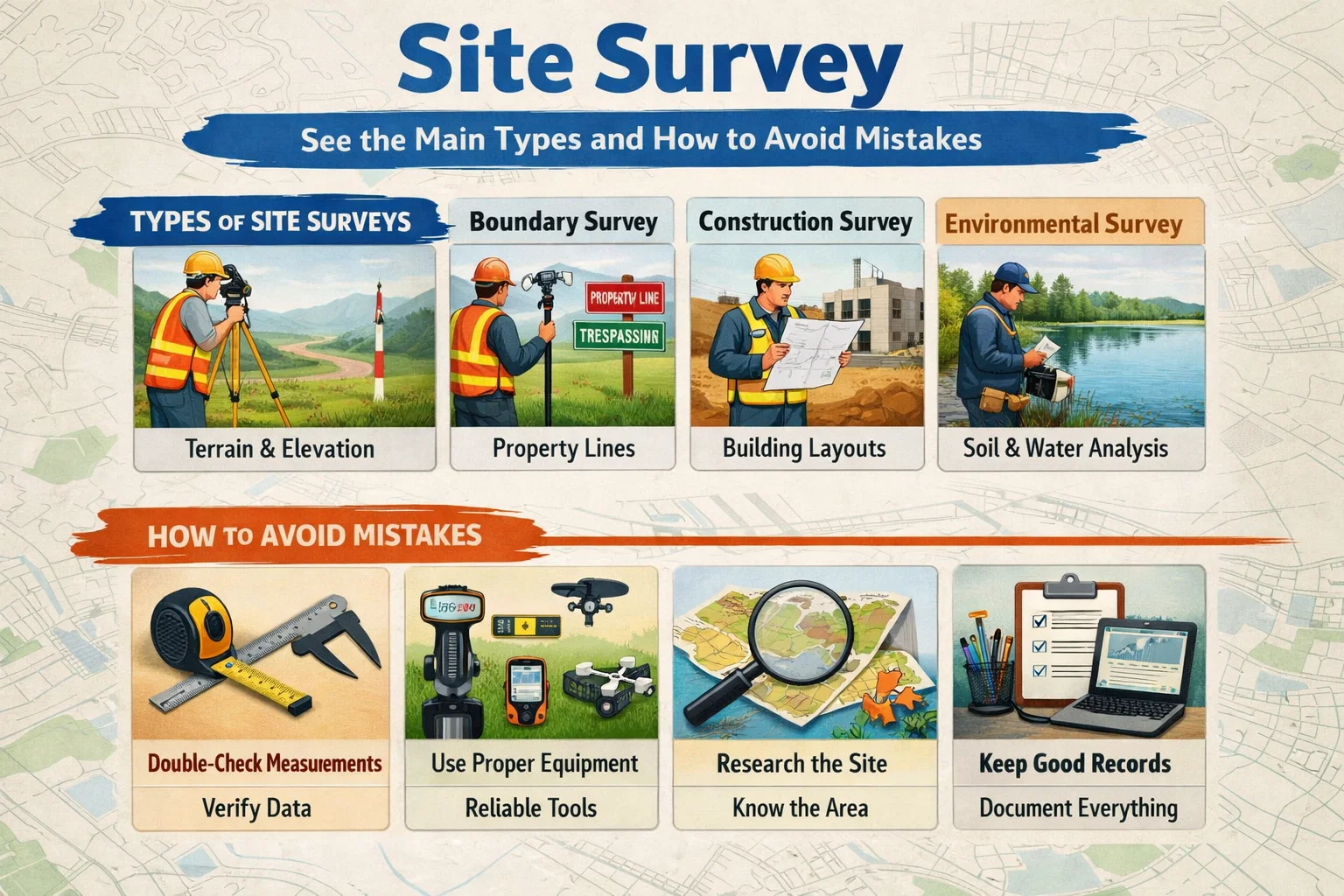
Conducting a Site Survey is an essential step for companies planning to implement new IT infrastructures, Wi-Fi networks, security systems, or physical changes to the corporate environment.
After all, this technical survey is what ensures that the project is feasible, efficient, and financially sustainable.
In practical terms, a site survey consists of a detailed analysis of the location where the solution will be implemented. The goal is to identify physical obstacles, interference, structural limitations, and opportunities for optimization prior to installation.
This allows the company to avoid rework, wasted resources, and performance failures that could compromise operations.
Why conduct a Site Survey at your company?
Ignoring this step may seem like an initial saving, but it usually generates much higher costs in the medium and long term. A well-executed Site Survey offers strategic benefits, such as:
Data accuracy: the survey avoids the purchase of incompatible or inadequate equipment, ensuring that each item is truly necessary for the project.
Resource optimization: by identifying the ideal installation points, the hardware operates with maximum efficiency and coverage.
Risk mitigation: common interferences, such as concrete walls, metal structures, electric motors, and neighboring networks, are mapped before they cause instability or system crashes.
Cost planning: the Site Survey allows you to prepare a realistic budget, reducing financial surprises during implementation.
Main types of Site Survey
The type of survey varies depending on the project’s objective. The most common are:
1. Network Site Survey (Wi-Fi)
Widely used in corporate environments, it seeks to ensure complete coverage and adequate performance of the wireless network, avoiding blind spots. It can be performed in three ways:
- Predictive: done by software, using the floor plan to simulate coverage and interference.
- Passive: the technician walks through the environment measuring existing signals and noise, without connecting to the network.
- Active: measures actual performance when connecting to the network, evaluating speed, latency, and packet loss.
2. Infrastructure and IT Site Survey
Focusing on the physical aspects, it evaluates structured cabling, racks, electrical availability, grounding, and cooling systems, especially in server rooms and data centers.
3. Security Site Survey
Focused on the implementation of CCTV, access control, and sensors, it identifies ideal camera angles, vulnerable points, and areas that require greater monitoring.
Recommendations for an efficient Site Survey
In order for the site survey to generate reliable results, some best practices are essential:
Use an up-to-date floor plan, as any structural changes directly impact interference and coverage calculations.
Consider the actual occupancy of the environment. An empty office behaves very differently from a space with people, devices, and equipment in operation.
Set clear objectives before you begin: is the focus on network performance, security, redundancy, or future expansion?
Request a detailed technical report, including heat maps, bill of materials (BoM), and implementation schedule.Finally, think about the future. A good Site Survey assesses whether the current structure supports 20% to 30% growth in operations, avoiding new investments in the short term.
 Mehar Mozan
  Charlotte