
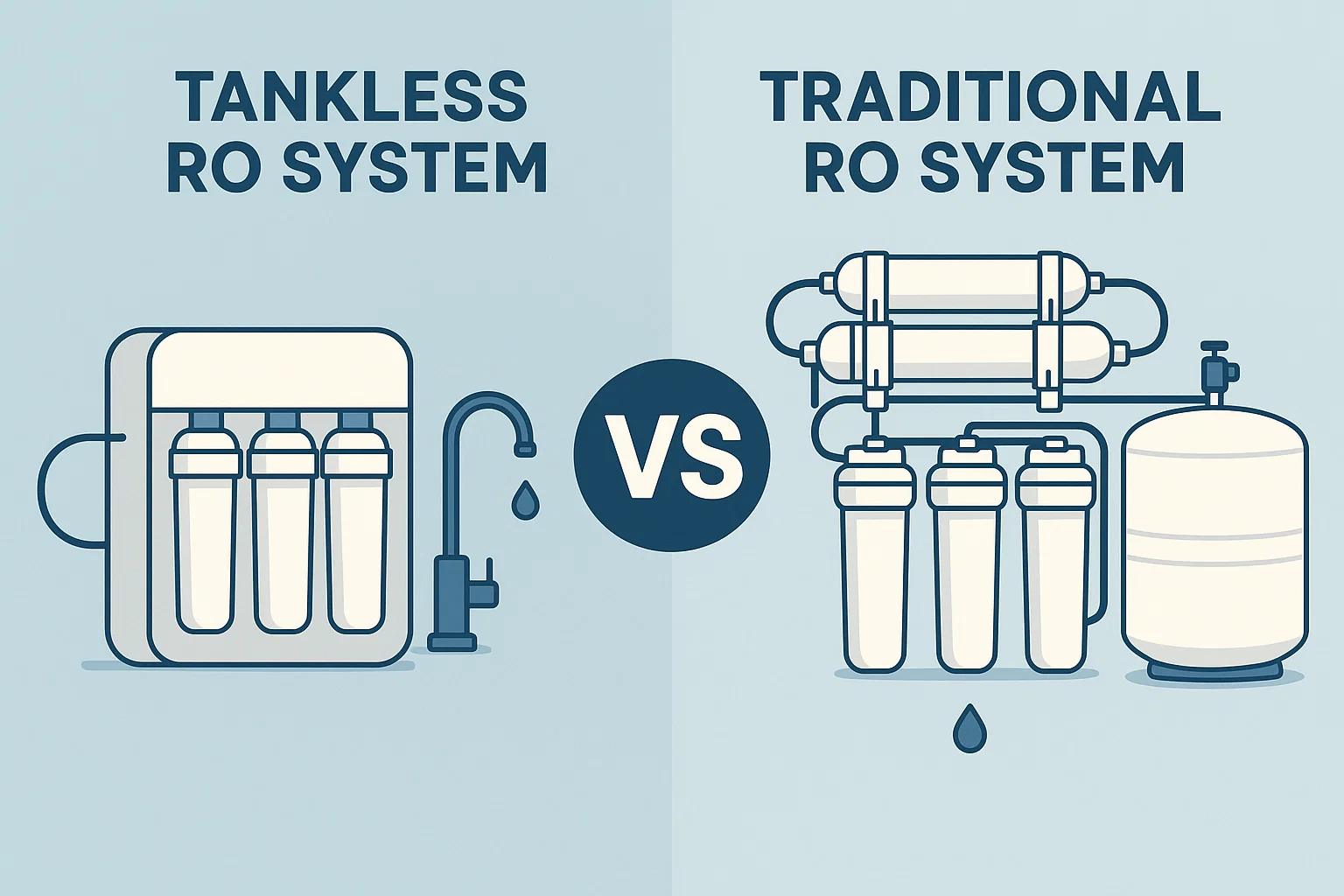
When it comes to getting clean and safe drinking water at home, RO systems have long been a popular choice. But lately, a newer option has started catching the attention of many people, which is a tankless reverse osmosis system. It offers quicker water flow, saves space, and comes with more advanced technology.
On the other hand, the traditional reverse osmosis systems with a storage tank have made a strong reputation over the past years for offering a consistent and reliable supply of purified water.
So, if you are thinking of buying an RO system for the first time, then selecting between these two can feel a bit confusing.
That is why, in this blog post, we’ll walk you through the key differences between a tankless RO system and a traditional RO system.
Also, read our recent blog post about Understand the Working Mechanism of Alkaline Water Filter
Key Differences between Tankless RO System vs Traditional RO System with Tank
Here are the five key differences between a tankless RO system and a traditional RO system with a tank that can assist you in selecting the system wisely.
Design and Space:
One of the most noticeable differences between tankless and traditional RO systems is how they’re designed and how much space they take up. The tankless system is designed with a clean, minimal look that doesn’t take up much space. It fits cleanly beneath the kitchen sink and filters water instantly, without the need for a storage tank.
On the other hand, a traditional RO system includes a tank that stores filtered water for future use. However, this system makes sure you always have water ready. But the tank takes up extra space and requires daily cleaning.
If you like a tidy, clutter-free kitchen, then purchasing a tankless system is the best option for you as it’s more convenient and a better fit for smaller spaces.
Water Flow and Speed:
Another major difference between the two systems is the water flow rate. A tankless RO system provides clean water instantly because it purifies water on demand. You don’t have to wait for the tank to fill up, which makes it quicker and more convenient for daily use.
While a traditional reverse osmosis system stores filtered water in a tank, if the tank is empty, then you will need to wait for it to refill. The tankless RO system provides a smoother and more efficient experience for families who use water repeatedly.
Maintenance and Filter Replacement:
In general, tankless RO systems are easier to manage when it comes to maintenance. They also come with helpful features, such as indicators that let you know when it’s time to change the filters.
This removes confusion and makes it much easier for you to take care of the system. In contrast, traditional reverse osmosis systems mostly need a little more care and daily attention for better results. Since the storage tank can collect bacteria over time, it needs to be cleaned regularly and changing filters can sometimes be a bit of a task.
If you’d prefer something that is easier to manage and does not need much upkeep, then a tankless reverse osmosis system is a great option.
Water Wastage and Efficiency:
One of the biggest differences between tankless and traditional RO systems lies in how they handle water use. Tankless models are specifically built with improved technology that helps cut down on wastewater during filtration. Some models even recover more clean water from each cycle, so less water ends up being wasted.
However, traditional systems usually let more water go to waste, especially when the storage tank is refilling or when the filters have been in use for a while.
With the passage of time, this not only affects your water bill but also is not great for the planet. If saving water matters to you, then a tankless RO system is clearly the more efficient pick.
Cost and Installation:
When it comes to cost and installation, there is a clear difference between the two systems. Tankless RO systems usually cost more upfront because of their advanced design and compact build. But in the long run, these systems often make up for it with lower maintenance costs and better efficiency.
Traditional RO systems are easier on the budget initially, but through the frequent filter changes and tank cleaning, they can slowly increase expenses over time.
Installation is another area where tankless systems have the edge over the others, because they’re smaller, easier to fit in limited spaces, and often work with a simple plug-and-play setup. So, it really comes down to whether you prefer a lower starting cost or better long-term value.
Which RO System is Better for You?
If you want a clean water solution that’s modern, efficient, and does not take up much space, a tankless RO system is hard to beat. It gives you purified water right away, saves water in the process, and fits neatly under the sink without the bulky storage tank. Plus, the smart features and lower maintenance can make it ideal for busy households.
On the other hand, traditional RO systems still do the job good; tankless models provide a more convenient and upgraded experience overall. So, if you value performance, design, and long-term savings, then a tankless RO system is definitely the smarter pick for today’s homes.
Conclusion:
Choosing a tankless RO system and a traditional RO system with a tank ultimately depends on your needs, space, and lifestyle. Traditional systems have been trusted for years and offer reliability, but they normally take up more space and can be less efficient.
On the other hand, tankless RO systems bring modern convenience, faster water flow, and smarter features, all while saving space and reducing water waste. If you’re setting up a brand new kitchen or upgrading your water filter, then the tankless system is definitely worth considering. It’s a clean, efficient, and reliable option for safe drinking water at home.
 Charlotte